
JCivilAvia at the Villa d'Este Grand Prix
A new edition of the Six Lakes Rally has brought Como back at the heart of seaplane aviation. A reportage by JCivilAvia.
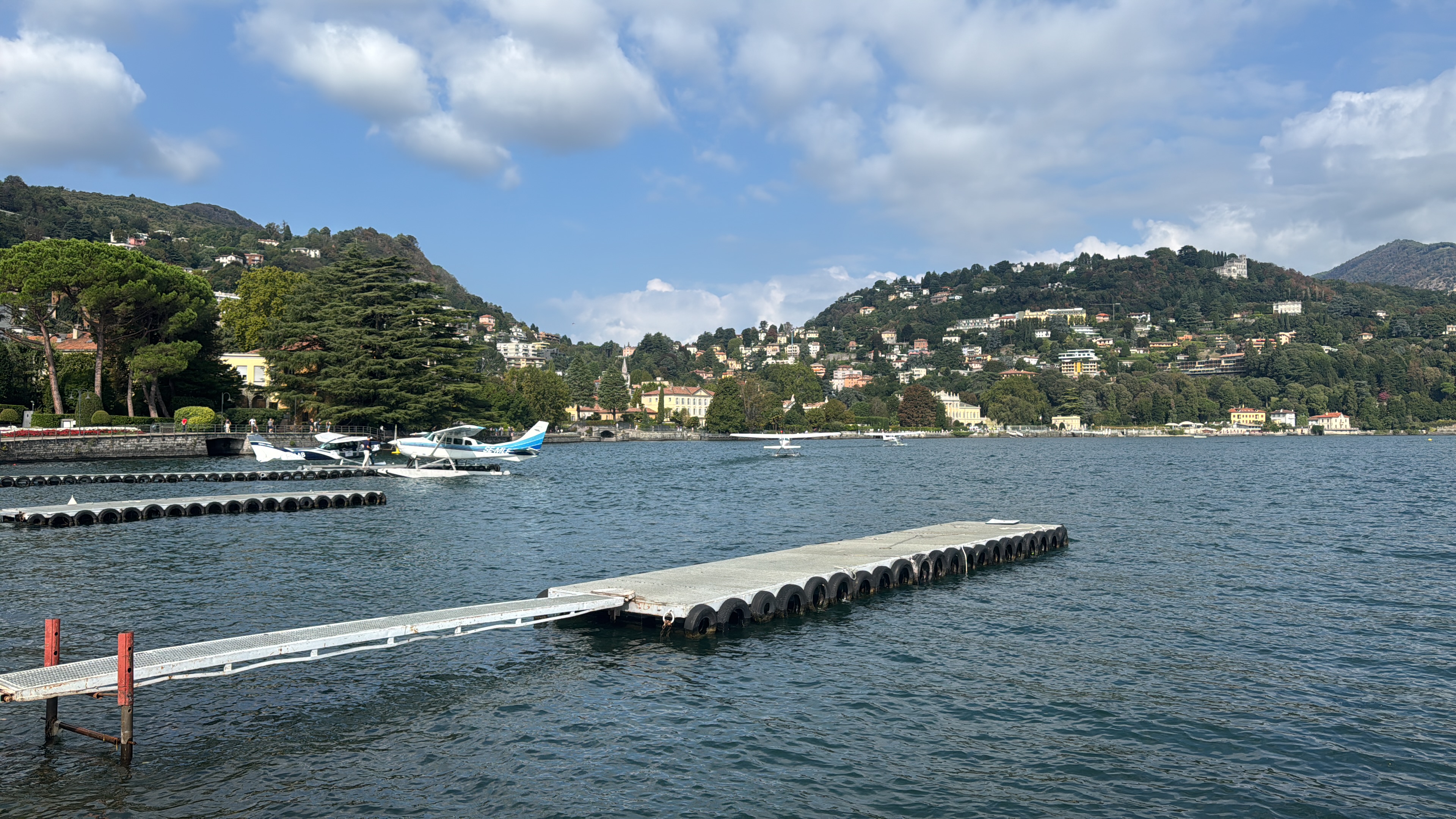
Lake Como shores are renowned for their characteristic beauty. The quaint walkways stretching along the shores of the Lario allow locals, tourists, and all those who are looking for a breath of fresh air to bask in its dramatic landscape, where the loudest noise is, at times, only coming from the engines of boats riding the gentle waves of the lake.
However, on September 12, a different kind of engines contributed to painting a different kind of sonic picture for the Lake: that of Aero Club Como’s seaplanes. Keeping with a long and much cherished tradition, pilots and aviation enthusiasts gathered from around the world for the Six Lakes Air Rally - Villa D’Este Grand Prix. A competition that tests skills in navigation and aircraft control, the Air Rally is a celebration of pilots and the spirit of early aviation - of which seaplane flying was its beating heart.
Lake Como has been for more than a century one of the most important centers for seaplane aviation in the world. After Henri Fabre’s first ever seaplane flight took place in Marseille in 1910, the shores of the Lario saw the first air competitions in 1913 with the Lakes Grand Prix. Spanning across several days, the Grand Prix tested the aviators’ and machines’ prowess across a series of disciplines, such as climbing speed, overall flying speed, altitude, and take-off distance. The winner of the first iteration of the Grand Prix was the French pioneer Roland Garros, although his victory was contested by the supporters of another great early aviator, the German Otto Hirt, who was also poised to win. Among the most important editions of the air race, the one disputed in 1922 and 1927 must be remembered, the latter dedicated to the memory of Alessandro Volta, the genius scientist from Como.
In this year’s edition, 14 international teams competed for the coveted Villa D’Este prize. Among them, it was possible to spot some that wrote the recent history of the race (such as the veteran duos formed by Marco Di Pilato and Fabio Parma, and Gabriele Ferruzzi and Alessandro Ganci) as well as teams with pilots approaching the race for the first time. We sat down with one of them, Ali Ilya Sari, a pilot from Antalya, Turkey, who shared his experience with JCivilAvia. “This is my first time competing in an air rally,” he said after the race, “as I have only experience as PIC [Pilot in Command] in ‘regular’ flights. Instead, today I could compete with more experienced pilots.” Ali is currently studying at the Pilotage department at Antalya Bilim University, and his face was still lit up with the excitement of the race.
Each team was composed of two people, a pilot and a navigator, who are supposed to work in synergy to complete the rally: the former “has the duty to pilot, of course, control speed and altitude in order to keep us safe” while the latter “has to prepare the charts and be always aware of where the aircraft is”, Ali told us. Thirty minutes before the flight, each team participates in a briefing session where they are given “papers showing the so-called turning points, that is, checkpoints that must be reached by the aircraft at specific times, which were also given to us.” Spotting and catching the turning points is a hard task to do, Ali revealed to us, and, for this reason, “we were given some en route pictures to help us spot them, as the turning points can be literally everything everywhere, like buildings and churches.”
The preparation for the flight requires careful communication between pilots and navigators, as it can make a significant difference in how quickly the teams reach the turning points and complete their rally. Geography and visual reconnaissance also play a key role in successfully completing the race, and each team was given two preparatory flights before the actual race to fine-tune their skills; Ali and his partner decided to use them to train the ability to spot the turning points: “we took the documents showing last year’s checkpoints, and we completed the navigation task that was given in the previous edition of the Grand Prix”, he said with a hint of pride in his eyes. But the preparations did not go entirely as planned, as the teams experienced how unforgivingly changeable the weather can be in Lake Como. “We could only perform one preparation flight”, Ali told us, “since the second was canceled because of adverse weather conditions”. But the whims of the weather did not flinch Ali’s spirit as he confidently added that “one flight was enough to prepare ourselves for the race and understand how to complete it”.
Participating in the Six Lakes Air Rally not only represented the opportunity to participate in a competition that has made the last 113 years of civil aviation history, but also the chance to look at Lake Como’s stunning landscape from a point of view that only a few people can claim to have had. “Flying over the lake was truly amazing. At some point during the race, we spotted the town of Bellagio: the atmosphere there was really peaceful and the mountains, with their little villages, are truly beautiful”, Ali said.
In the evening after the race, the hangar of Aero Club Como hosted an exclusive gathering with all the teams, organizers and partners of the Air Rally. During the event, the winners of this year’s edition of the race were revealed: Alessandro Ganci and Gabriele Ferruzzi. Ali finished his race in the ninth position, but the result did not discourage him: “After seeing the decisions of the umpires, I understand where my partner and I could have been more precise, but that’s fine: I’ll come back next year and do better!”
The shores of Lake Como have come back to their usual pleasant quietness after a full day of racing, and the roars of the airplanes rolling for take off have disappeared after echoing in the mountains around Como. But the Six Lakes Air Rally - Villa D’Este Grand Prix will return next year to write yet another page of aviation history.